Iran Attacks 10 Ships After U.S. Destroys 5 Iranian Oil Tankers — What Happens Next?
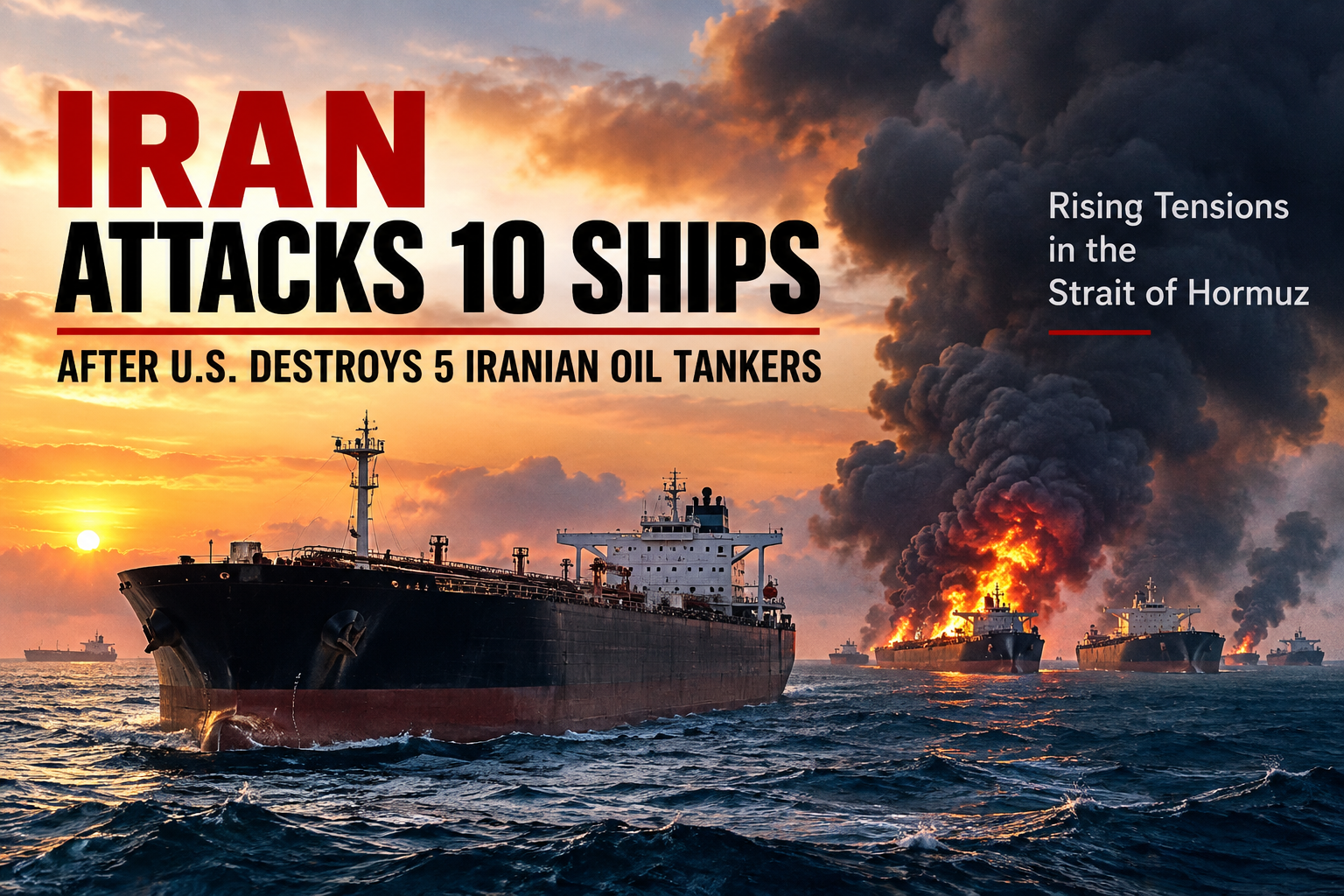
Iran Attacks 10 Ships After U.S. Destroys 5 Iranian Oil Tankers
Tensions around the Strait of Hormuz have intensified after the United States destroyed five Iranian oil tankers and Iran said it retaliated by attacking 10 ships near the strategic waterway.
According to Reuters, Iran said the ships targeted included two U.S. vessels and eight oil tankers. The attacks have increased concerns about the safety of ships traveling through one of the world’s most important routes for oil and energy supplies.
Why Is the Strait of Hormuz So Important?
The Strait of Hormuz is a narrow waterway connecting the Persian Gulf with the Arabian Sea. A significant amount of the world’s oil and natural gas moves through this area.
When ships are attacked or traffic is disrupted, concerns about global oil supplies can quickly increase.
Could This Affect Gas Prices?
The conflict is already putting pressure on energy markets. Oil prices climbed above $100 a barrel following the recent escalation.
If shipping disruptions continue, higher transportation and energy costs could eventually affect consumers, including what Americans pay at the gas pump.
What Happens Next?
The biggest question is whether the attacks will continue or whether diplomatic efforts can reduce tensions.
For now, governments, shipping companies and energy markets are closely watching the Strait of Hormuz. Any further attacks or interruptions to shipping could have consequences far beyond the Middle East.
What Should Americans Watch?
For most Americans, three things are worth watching: oil prices, gasoline prices and whether shipping through the Strait of Hormuz returns to normal.
The situation can change quickly, so new developments in the coming days could significantly change the outlook.
Why Oil Tanker Attacks Matter Around the World
Oil tankers carry enormous amounts of crude oil between producing countries and markets around the world. When tankers are attacked or shipping routes become dangerous, companies may delay voyages, change routes or face higher insurance and transportation costs.
Those disruptions can affect more than ships at sea. They can increase concerns about whether enough oil will reach global markets, which can put upward pressure on energy prices.
Why Americans Should Pay Attention
Americans may be thousands of miles from the Strait of Hormuz, but events there can still affect household budgets. When global oil prices rise, the effects can eventually reach gasoline, transportation and the cost of moving goods.
That does not mean every Strait of Hormuz attack will automatically cause gas prices to jump. Prices depend on many factors, including global oil supplies, demand and how long shipping disruptions last.
What Could Happen to Shipping?
Shipping companies will be watching closely for additional oil tanker attacks and deciding whether vessels can safely travel through the region. A prolonged disruption could make it more expensive and difficult to move oil through this important waterway.
If tensions ease and shipping returns to normal, some pressure on energy markets could also ease. If attacks continue, however, uncertainty could remain high.
Could Oil Prices Keep Rising?
Oil prices have already become an important part of this story. Investors will be watching whether supplies remain available and whether tankers can continue moving safely through the Strait of Hormuz.
For American consumers, the most visible effect could eventually be at the gas pump. That is why the Iran attacks 10 ships story is not only about events in the Middle East—it could also have economic consequences elsewhere.
What to Watch in the Coming Days
Watch for new reports about the Strait of Hormuz, additional attacks on ships, changes in oil prices and any diplomatic efforts to reduce tensions.
Because this is a developing story, details may change as governments and news organizations release new information.
Sources: Reuters reporting on the Strait of Hormuz conflict and global energy markets.