
Why Are Gas Prices So High? 7 Shocking Reasons Behind High Gas Prices in 2026
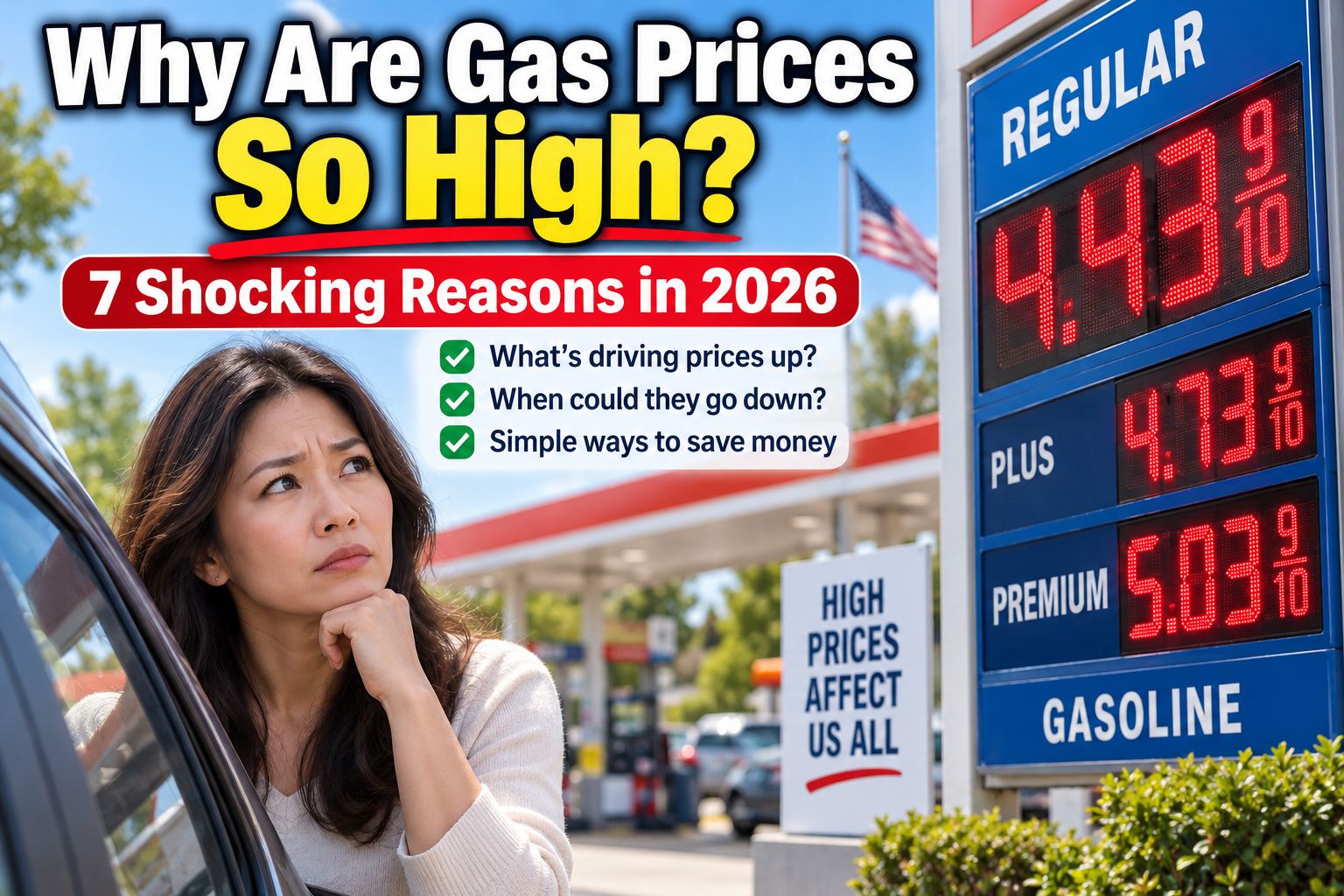
If filling your car suddenly feels much more expensive, you’re not imagining it.
As of September 30, 2026, the national average for regular gasoline is about $4.43 per gallon, according to AAA. One year ago, it was about $3.15 per gallon.
That difference can hit a household budget quickly. A 15-gallon fill-up at today’s national average costs about $66.51, compared with about $47.26 at last year’s price — roughly $19 more for one tank.
So, why are gas prices so high right now?
There isn’t one simple cause. The price Americans see at the pump is influenced by crude oil prices, refinery conditions, gasoline supplies, transportation costs, taxes and events affecting the global energy market.
Table of Contents
- Crude oil is expensive
- Global supply disruptions matter
- Gasoline supplies are tight
- Refinery costs affect the price
- Prices vary dramatically by location
- The usual autumn price relief has been weaker
- Energy markets remain uncertain
- Where does your gas money go?
- Why doesn’t high U.S. oil production guarantee cheap gas?
- When will gas prices go down?
- How higher gas prices affect your budget
- Ways to save money on gas
- Frequently asked questions
Many drivers are asking why are gas prices so high even after the summer driving season has ended.
Gas Prices Update — October 26, 2026
Gas prices have eased slightly in recent weeks, but American drivers are still paying considerably more than they did last year.
According to AAA, the national average for regular gasoline was approximately $4.29 per gallon on October 26, 2026. On October 22, AAA reported that prices had declined by about six cents over the previous week.
One reason for the recent decline is the switch to less expensive winter-blend gasoline. However, elevated crude oil prices and uncertainty surrounding international oil supplies continue to limit how much drivers save.
What does this mean for your household budget?
At $4.29 per gallon, filling a 15-gallon tank costs approximately $64.35. Families who purchase 45 gallons per month would spend about $193.05 on gasoline alone.
Drivers can reduce expenses by comparing nearby gas stations, combining errands, maintaining proper tire pressure, and avoiding unnecessary idling.
Gas prices may change as crude oil markets, refinery operations, and gasoline supplies shift. Checking updated prices regularly can help households plan their transportation budgets.
1. Crude Oil Is Expensive
Crude oil is the raw material used to produce gasoline, so its price is one of the biggest influences on what drivers ultimately pay.
When crude becomes more expensive, refiners have to pay more for their primary input. Those higher costs can eventually reach consumers at the pump.
Oil prices remain elevated in late September amid uncertainty surrounding Gulf supplies and international developments.
2. Global Supply Disruptions Matter
Oil is a global commodity.
That means a supply disruption thousands of miles from the United States can still affect American gasoline prices.
Recent disruptions involving Gulf oil exports and continued uncertainty surrounding the Strait of Hormuz have contributed to volatility in energy markets.
Even when oil continues flowing, uncertainty about future supplies can influence prices.
Global supply disruptions are another reason why are gas prices so high. Because oil is traded worldwide, disruptions or fears about future supply can raise crude-oil costs and eventually affect what American drivers pay at the pump.
3. Gasoline Supplies Are Tight
Crude oil isn’t the only supply that matters.
Drivers need finished gasoline, and global gasoline supplies have also been under pressure.
When gasoline inventories become tighter, the market has less cushion if a refinery has problems, demand rises unexpectedly or imports decline.
That can make prices more sensitive to disruptions.
This helps explain why are gas prices so high even when crude oil is available. When finished gasoline supplies are tight, even a relatively small disruption can put upward pressure on prices at the pump.
4. Refinery Costs Are Part of the Story
Crude oil cannot go directly from an oil well into your vehicle.
It first has to be processed by a refinery into gasoline and other petroleum products.
The difference between crude-oil costs and wholesale refined-fuel prices is often discussed using refining margins, sometimes called crack spreads.
In 2026, those margins have been unusually high as global supplies of refined fuels tightened.
So even if crude oil stops rising, gasoline prices may not immediately fall by the same amount.
Refinery costs are another reason why are gas prices so high. When refining capacity is tight or margins rise, drivers can continue paying more even when crude-oil prices begin to stabilize.
5. Where You Live Can Make a Huge Difference
The national average doesn’t mean every American pays $4.43.
The latest EIA weekly figures show striking regional differences:
Gulf Coast: about $3.92 per gallon
Midwest: about $4.29
East Coast: about $4.29
Rocky Mountain: about $4.49
West Coast: about $5.72
California’s statewide average in the same EIA report was approximately $6.19 per gallon.
Why such a large difference?
State taxes, special fuel requirements, local supply and demand, refinery access and transportation costs can all influence the final price.
Where you live is another important reason why are gas prices so high for some drivers. Taxes, fuel requirements, refinery access and transportation costs can make the price at the pump dramatically different from one state or region to another.
6. The Usual Autumn Price Relief Has Been Weaker
Gas prices often decline after the busy summer driving season.
But 2026 hasn’t followed the usual pattern very closely.
AAA reported in late September that gasoline was at its highest national average ever for that time of year and that September was on track for a monthly record.
High crude-oil costs and continuing global supply uncertainty have limited the seasonal relief drivers normally hope to see.
This unusual seasonal pattern is another reason why are gas prices so high in 2026. Even after summer driving demand eased, crude-oil costs and supply concerns kept pressure on gasoline prices.
7. Energy Markets Remain Uncertain
There is some encouraging news.
Some Gulf oil exports have been recovering, which could eventually relieve part of the pressure on global supplies.
But the market remains uncertain.
This uncertainty is another reason why are gas prices so high in 2026.
Gasoline and other refined-fuel inventories, refinery output, international developments, transportation costs and crude-oil prices can all change quickly.
That’s why gasoline prices sometimes move sharply even when drivers haven’t noticed an obvious change in their local area.
Where Does Your Gas Money Go?
When you pay $4 or $5 for a gallon of gasoline, that money isn’t simply the price of crude oil.
The pump price generally reflects several components:
- Crude oil
- Refining
- Distribution and transportation
- Retail costs and margins
- Federal and state taxes
The exact percentages change as oil prices, refinery margins and other costs move.
This helps explain something that often confuses consumers: crude oil can become cheaper without gasoline immediately falling by the same amount.
The rest of the supply chain still matters.
If America Produces So Much Oil, Why Isn’t Gas Cheap?
The United States produces enormous amounts of crude oil, but gasoline prices aren’t determined solely by domestic oil production.
Oil and refined fuels trade in global markets.
Different refineries are also designed to process different types of crude oil, and gasoline still must be refined, transported and distributed before reaching a station.
That means strong U.S. oil production can help supply, but it doesn’t isolate American drivers from global energy prices.
When Will Gas Prices Go Down?
This is probably the question drivers care about most.
Unfortunately, there is no reliable date when gasoline prices are guaranteed to fall.
Prices could move lower if:
- Crude oil prices decline
- Gulf supplies continue recovering
- Global tensions ease
- Gasoline inventories rebuild
- Refinery output increases
- Seasonal demand weakens
But new disruptions or tighter fuel supplies could push prices higher again.
Rather than relying on a specific prediction, consumers can watch crude-oil prices, gasoline inventories and national averages for signs that conditions are changing.
Understanding why gas prices are so high today also helps explain what needs to change before drivers can see meaningful relief.
What Do Higher Gas Prices Mean for Your Budget?
At today’s national AAA average, a 15-gallon tank costs roughly $66.51.
At the national average from one year ago, the same amount would have cost about $47.26.
That’s approximately $19 more every time you buy 15 gallons.
If a household buys 45 gallons in a month, the difference works out to roughly $58 more per month, using those national averages.
For families already watching grocery, housing, insurance and utility expenses, another $50 or $60 per month can matter.
When the Paycheck Doesn’t Stretch Far Enough
For many households, the hardest part isn’t just paying more for gasoline. It’s paying more for gas, groceries, clothing, utilities, insurance and other everyday necessities while trying to make the same paycheck cover everything.
When income doesn’t rise as quickly as household expenses, families may have to make difficult choices. Some people may drive less, postpone buying clothes, cut back on groceries, skip entertainment or delay other purchases simply to keep essential bills paid.
That financial pressure can also create significant stress and worry. Constantly wondering whether there will be enough money for food, fuel and bills can take a toll on a person’s well-being. If someone is struggling to afford enough nutritious food or other necessities, looking for local food assistance and community resources can be an important step.
Higher gas prices aren’t just numbers on a station sign—they can affect what a family can afford each week. For a household already living on a tight budget, another $10, $20 or $50 in monthly expenses can change what the family is able to buy.
Higher transportation costs can also affect businesses that move food and merchandise, although the effect on individual store prices varies considerably.
How to Save Money on Gas
You can’t control global oil prices, but you can reduce how much gasoline your household uses.
Compare prices before filling up. Nearby stations can sometimes have surprisingly different prices.
Combine errands. One organized trip can use less fuel than several separate drives.
Keep your tires properly inflated. Follow your vehicle manufacturer’s recommended tire pressure.
Avoid unnecessary idling. Sitting with the engine running uses fuel without getting you anywhere.
Accelerate smoothly. Aggressive acceleration and braking can increase fuel consumption.
Remove unnecessary weight. Don’t carry heavy items in your vehicle longer than necessary.
Use rewards carefully. Fuel rewards can help, but make sure you’re actually saving money after considering fees or purchasing requirements.
Small savings may not seem impressive on one fill-up, but they can add up over a year.
Frequently Asked Questions
Why are gas prices so high right now?
High crude-oil prices, tight global gasoline supplies, elevated refinery margins and uncertainty affecting global energy supplies are among the important factors contributing to current prices.
What Was the Average Gas Price on September 30, 2026?
AAA reports a national average of approximately $4.43 per gallon for regular gasoline on September 30, 2026.
Are gas prices higher than last year?
Yes. AAA’s national average is roughly $1.28 per gallon higher than one year ago.
Is this the highest U.S. gas price ever?
Not on a national nominal-average basis. AAA lists its record national average for regular unleaded gasoline at approximately $5.02 per gallon on June 14, 2022.
However, today’s price is unusually high for this time of year.
Why are gas prices so different from state to state?
Taxes, regional fuel requirements, refinery access, transportation expenses and local supply-and-demand conditions all contribute to differences between states.
Why can crude oil fall while gas prices stay high?
Gasoline prices include more than crude oil. Refining margins, distribution, inventories, taxes and retail costs also matter, and changes in crude prices can take time to work through the supply chain.
Will gas prices go down soon?
They could if crude prices decline, fuel supplies improve and geopolitical pressures ease, but gasoline prices are difficult to predict precisely.
The Bottom Line
Why are gas prices so high? The answer is a combination of expensive crude oil, tight refined-fuel supplies, refinery economics, regional differences and uncertainty in global energy markets.
For American households, the result is simple: filling the tank costs considerably more than it did a year ago.
Consumers can’t control the global oil market, but they can compare local prices, reduce unnecessary driving and pay attention to fuel efficiency.
And if global supplies improve and crude prices ease, drivers may eventually see some welcome relief at the pump.
How Much Could You Save on Gas Each Month?
Even small changes in driving habits can make a difference. For example, a household purchasing 45 gallons of gasoline per month could save $9 monthly if it finds gas for 20 cents less per gallon. That adds up to $108 per year. Combining errands, maintaining proper tire pressure, and comparing nearby gas stations can help families reduce transportation expenses without making major lifestyle changes.