Nepal-Tibet Flood Disaster: What Happened and Why It Was So Deadly
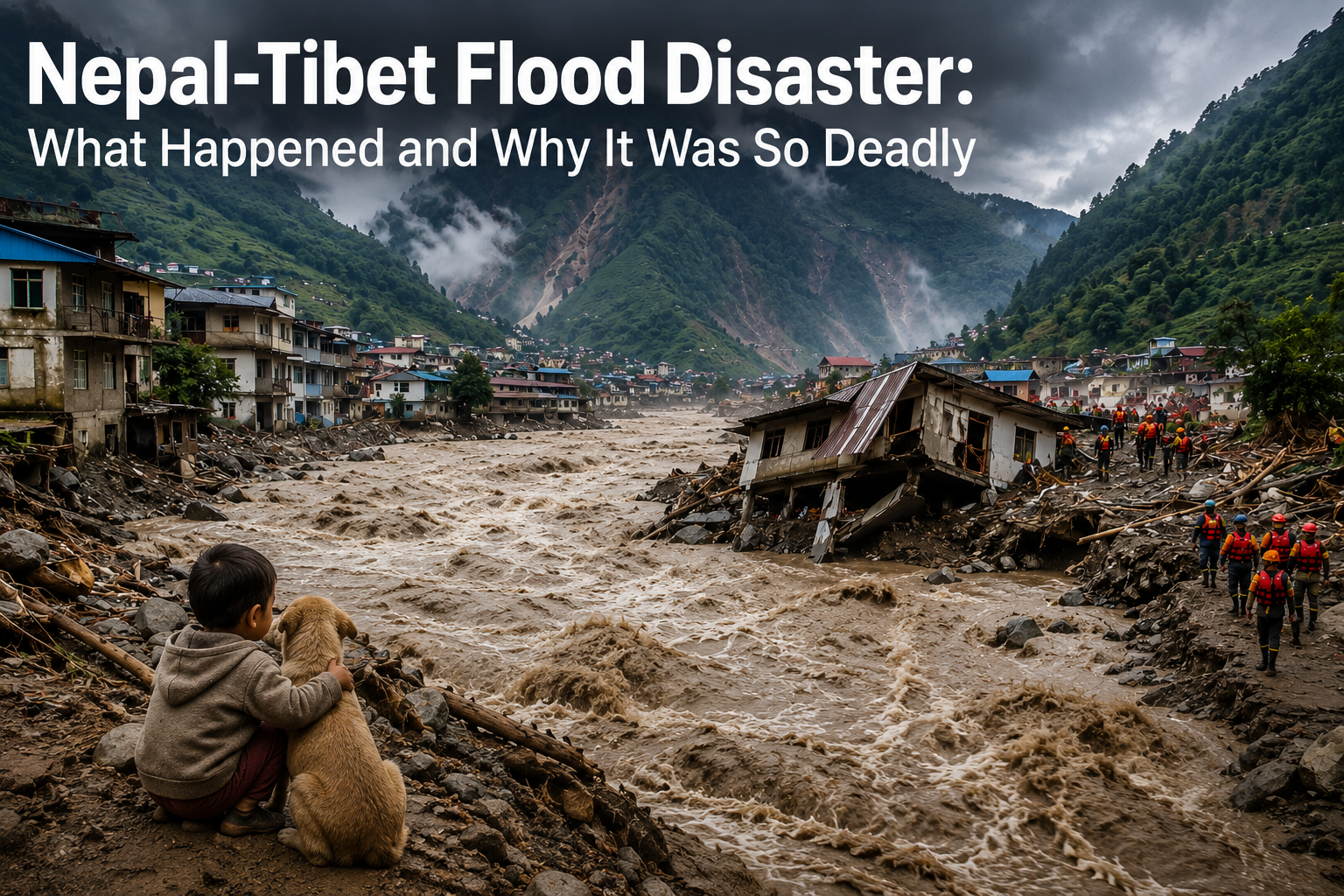
The Nepal-Tibet Flood Disaster has devastated mountain communities, leaving families overwhelmed and rescue teams searching for survivors. The disaster sent enormous amounts of water, mud, rock, and debris through the Himalayan region, destroying homes, roads, and other infrastructure. With rescue and recovery efforts continuing, the tragedy has drawn international attention as authorities work to determine the full extent of the damage.
WHAT HAPPENED IN THE NEPAL-TIBET FLOOD DISASTER?
The disaster was triggered when a huge mass of ice, rock, and debris collapsed in the Himalayan region, sending a powerful surge of water and mud downstream. The flood swept through communities near the Nepal-Tibet border, damaging roads, homes, bridges, and hydropower facilities. Rescue teams have been working in difficult mountain conditions to reach survivors and search for people still missing.
Why Was the Flood So Deadly?
Several factors made this disaster especially dangerous. The steep Himalayan landscape allowed water, mud, rocks, and debris to rush downhill with tremendous force. Communities in narrow valleys had little time to react as the flood moved through the region. Roads, bridges, and communication systems were also damaged, making it harder for emergency crews to reach some affected areas.
Rescue Efforts Continue
Rescue teams have been searching damaged communities and difficult mountain terrain for survivors and people who remain missing. Crews have also been working around damaged hydropower facilities and tunnels. The remote location, blocked roads, unstable ground, and continuing danger from debris have made the rescue operation extremely challenging.
Thousands of Families Affected
The Nepal-Tibet Flood Disaster has affected thousands of families across mountain communities. Homes and businesses have been damaged or destroyed, while some communities have been cut off because roads and bridges are no longer usable. Families now face the difficult task of rebuilding their homes and communities as recovery efforts continue.
Survivors may face a long recovery as authorities work to restore transportation, electricity, communications, clean water, and other essential services. Emergency crews are also working to reopen roads and reconnect isolated communities so food, medicine, and other supplies can reach families in need.
Why Himalayan Communities Are Vulnerable
The Himalayan region contains steep mountains, glaciers, rivers, and narrow valleys. When large amounts of ice, rock, water, or debris suddenly move downhill, communities below can be exposed to extremely powerful floods and landslides.
Scientists have also warned that climate change is altering glaciers and mountain environments around the world. However, determining exactly how climate change influenced any individual disaster requires careful scientific study.
WHY THESE FLOODS CAN BECOME SO POWERFUL
The steep valleys of the Himalayas can make sudden floods especially destructive. As water rushes downhill, it can pick up large amounts of loose rock, mud, and sediment. This added debris can turn a flood into a powerful moving mass capable of damaging roads, bridges, homes, and other infrastructure.
Mountain communities can also have very little warning because floodwater and debris may travel quickly through narrow valleys. Scientists continue to monitor glaciers, glacial lakes, unstable slopes, and other hazards across the Himalayan region to better understand the risks and help protect communities downstream.
What Happens Next?
Following the Nepal-Tibet Flood Disaster, the immediate priority is finding survivors and reaching isolated communities. Authorities will also need to assess damaged infrastructure and determine which areas remain unsafe.
The number of casualties and missing people can change as rescue teams obtain better information, so early figures should be treated as preliminary.
A Tragedy That Has Captured Global Attention
The Nepal-Tibet disaster is a reminder of how quickly natural hazards can devastate mountain communities. Behind every statistic are families and communities dealing with tremendous loss.
As rescue and recovery efforts continue, Sarangno will update this story when reliable new information becomes available.