AI Smart Glasses: 7 Amazing Ways They Can Make Everyday Life Easier
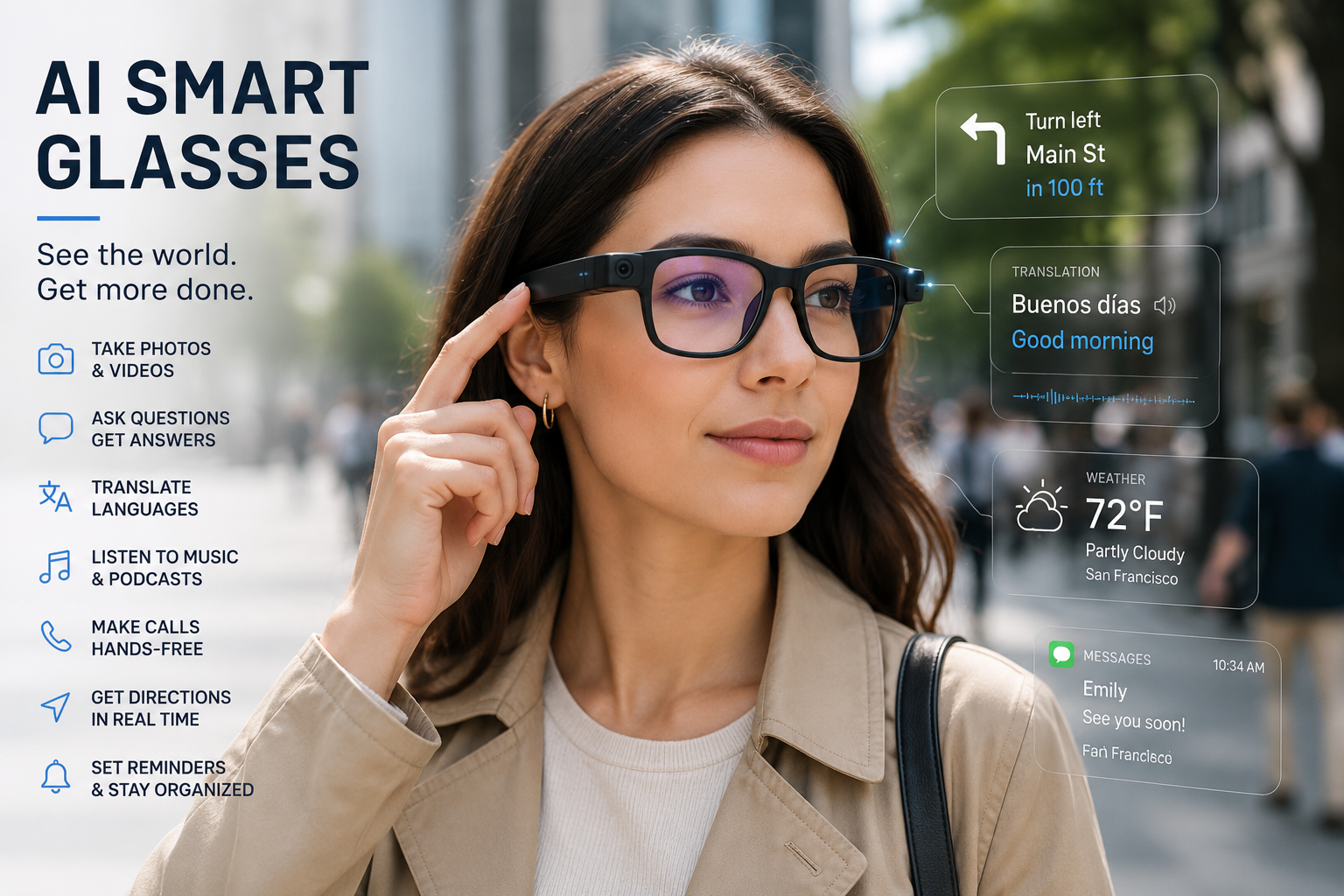
AI smart glasses are quickly becoming one of the most talked-about new technologies. These glasses can use artificial intelligence to answer questions, take photos, translate languages, play audio, and even help you understand what you are looking at. But how do AI glasses actually work, and are they useful enough for everyday life?
Unlike ordinary eyeglasses, AI smart glasses combine familiar eyewear with technology such as microphones, speakers, cameras, sensors, and an AI assistant. The exact features depend on the model. Some glasses focus on hands-free photos, calls, music, and voice questions, while more advanced designs may display information in front of the wearer. This means two products called “AI smart glasses” can offer very different experiences.
WHAT ARE AI SMART GLASSES?
AI smart glasses are quickly becoming one of the most talked-about new technologies. These glasses can use artificial intelligence to answer questions, take photos, translate languages, play audio, and even help you understand what you are looking at. But how do AI glasses actually work, and are they useful enough for everyday life? Interested in more everyday technology tips? Read our Windows 11 guide.
AI smart glasses work by combining eyewear with small electronic components and a connection to a smartphone or online service. Depending on the model, you may be able to speak a question aloud, hear an answer through built-in speakers, take a hands-free photo, listen to music, make a call, or get help identifying and understanding something you are looking at. Not every pair has the same capabilities, so checking the features before buying is important.
WHAT CAN AI SMART GLASSES DO?
AI smart glasses can make everyday tasks easier without constantly reaching for your phone. Depending on the glasses and AI assistant, you can ask questions about things around you, take photos and videos, hear directions, listen to music, make calls, and get help translating languages. Some newer glasses can even show information directly in your field of view.
One advantage of AI smart glasses is that many features can be used hands-free. This may be helpful while walking, traveling, cooking, shopping, or doing other activities when reaching for a phone is inconvenient. Voice commands can let you ask a question, capture a photo, hear information, or start certain features while keeping your hands free.
HOW CAN AI GLASSES HELP IN EVERYDAY LIFE?
AI glasses could be useful in many ordinary situations. Imagine looking at a sign in another language and asking your glasses to translate it, getting walking directions without holding your phone, taking a photo while your hands are busy, or asking AI a question about something you see. They may also help people stay connected through calls, messages, music, and reminders while on the go.
Another everyday benefit is convenience when your hands are occupied. Someone cooking could ask a question without touching a phone, a traveler could request information while carrying luggage, or a shopper could quickly ask about something they see. These hands-free features may make AI smart glasses especially useful when using a phone would be inconvenient.
WHICH AI SMART GLASSES ARE AVAILABLE?
Several AI smart glasses are now available with different features and styles. Popular examples include Ray-Ban Meta (Gen 2), Oakley Meta HSTN, Oakley Meta Vanguard, and Meta Ray-Ban Display. Some models focus on cameras, open-ear audio, voice commands, and Meta AI, while Meta Ray-Ban Display can also show information directly in the wearer’s view. Features and availability can vary by model and location.
HOW MUCH DO AI SMART GLASSES COST?
AI smart glasses can range from a few hundred dollars to much more, depending on the features. Some models are designed mainly for taking photos, listening to audio, making calls, and using an AI assistant, while more advanced glasses may include a built-in display. Prices and features are changing quickly as new models are released.
ARE AI SMART GLASSES SAFE AND PRIVATE?
AI smart glasses can be convenient, but privacy is an important consideration. Because some models contain cameras and microphones, users should be aware of when they are recording and respect the privacy of people around them. It is also a good idea to review the privacy settings and understand what information the glasses and connected apps may collect.
WHO ARE AI SMART GLASSES GOOD FOR?
AI smart glasses may be especially useful for travelers, busy parents, commuters, students, and people who want hands-free help during everyday activities. They can also be helpful for older adults who prefer asking a question by voice instead of constantly using a phone. However, whether they are worth buying depends on which features you would actually use.
ARE AI SMART GLASSES WORTH IT?
AI smart glasses are becoming more useful as artificial intelligence improves. For people who like hands-free technology, travel frequently, take lots of photos, or want quick access to an AI assistant, they could be very convenient. For others, a smartphone may still do everything they need. Before buying, compare the features, price, battery life, privacy settings, and whether the glasses work with your phone.
THE FUTURE OF AI SMART GLASSES
AI smart glasses are still developing quickly. In the future, they may become lighter, more comfortable, and capable of doing even more without needing to reach for a phone. Better batteries, improved AI assistants, and more useful displays could make them a common part of everyday life. As the technology improves, these glasses may become much more practical for ordinary people.